
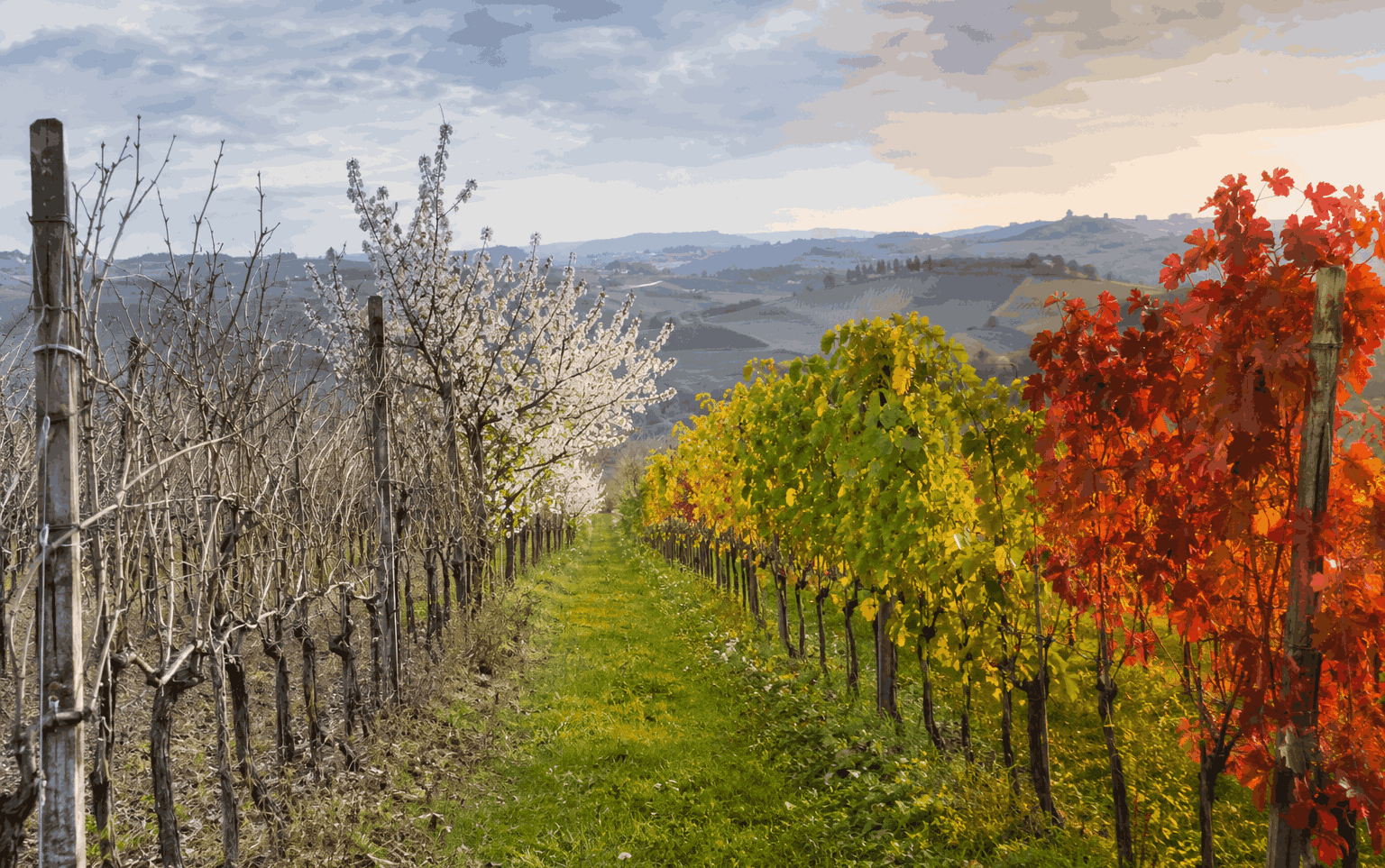
A year amongst the vines: work in the vineyard, month by month
When people think about wine, they often imagine the harvest and tasting. In reality, behind every bottle lies a full year of work, attention, and care in the vineyard.
The vine follows the rhythm of the seasons, and each month requires specific tasks to ensure the quality of the grapes and, consequently, the wine. Let's discover what happens in the vineyard throughout the year.
January: The Vine at Rest
During winter, the vine enters its dormant phase. At first glance, the vineyard seems inactive, but this is precisely when the plant stores energy for the new growing season.
In both the winery and the vineyard, the year's activities are planned and the condition of the vines is monitored.
February: Pruning Begins
With temperatures still low, one of the most important vineyard operations begins: winter pruning.
Through pruning, growers determine the number of buds that will produce grape clusters in the following season, influencing both yield and quality.
March: Preparing for Vegetative Growth
Days become longer and the soil awakens. Pruning is completed and the first soil management operations are carried out to encourage oxygenation and root development.
April: Bud Break
The buds begin to open and the first green shoots appear.
This is a delicate stage because late frosts can compromise the harvest. For this reason, the vineyard is carefully monitored.
May: Shoot Growth
Vegetation grows rapidly. Shoots lengthen and canopy management operations begin.
During this period, work focuses on maintaining the proper balance between vegetation and production.
June: Flowering
This is one of the most important moments of the year. The small vine flowers gradually transform into future grape berries.
Weather conditions during this period directly influence the quantity of grapes that will be harvested.
July: Fruit Set and Cluster Development
The berries begin to form and grow.
Targeted canopy management promotes air circulation and sunlight exposure, both essential for healthy and even ripening.
August: Veraison
The berries change color and the final stage of ripening begins.
Red grapes gradually develop their characteristic purple shades, while white grapes become more golden. Sugars increase and aromas intensify.
September: Harvest Time
For many varieties, this is the month of harvest.
Choosing the right harvest date requires experience and careful monitoring of sugar levels, acidity, and phenolic ripeness.
Every day can make a difference in the final quality of the wine.
October: The Final Harvests
Later-ripening varieties complete their maturation and are harvested.
After harvest, the vine continues storing nutrient reserves for the following season.
November: Preparing for Winter
Leaves take on autumn colors and begin to fall.
The vineyard gradually enters dormancy. It is the ideal time for inspections and maintenance before the cold season arrives.
December: The Cycle Ends
With winter, nature slows its rhythm once again.
For the winegrower, it is time to analyze the completed vintage and prepare for the new cycle.
A Year-Round Commitment
Wine is born long before the harvest. Every season brings challenges and opportunities, and every vineyard operation contributes to grape quality.
Behind every bottle are months of work, experience, and passion. This connection with the land and time is what makes wine a unique product capable of telling the story of its territory.
The vine follows the rhythm of the seasons, and each month requires specific tasks to ensure the quality of the grapes and, consequently, the wine. Let's discover what happens in the vineyard throughout the year.
January: The Vine at Rest
During winter, the vine enters its dormant phase. At first glance, the vineyard seems inactive, but this is precisely when the plant stores energy for the new growing season.
In both the winery and the vineyard, the year's activities are planned and the condition of the vines is monitored.
February: Pruning Begins
With temperatures still low, one of the most important vineyard operations begins: winter pruning.
Through pruning, growers determine the number of buds that will produce grape clusters in the following season, influencing both yield and quality.
March: Preparing for Vegetative Growth
Days become longer and the soil awakens. Pruning is completed and the first soil management operations are carried out to encourage oxygenation and root development.
April: Bud Break
The buds begin to open and the first green shoots appear.
This is a delicate stage because late frosts can compromise the harvest. For this reason, the vineyard is carefully monitored.
May: Shoot Growth
Vegetation grows rapidly. Shoots lengthen and canopy management operations begin.
During this period, work focuses on maintaining the proper balance between vegetation and production.
June: Flowering
This is one of the most important moments of the year. The small vine flowers gradually transform into future grape berries.
Weather conditions during this period directly influence the quantity of grapes that will be harvested.
July: Fruit Set and Cluster Development
The berries begin to form and grow.
Targeted canopy management promotes air circulation and sunlight exposure, both essential for healthy and even ripening.
August: Veraison
The berries change color and the final stage of ripening begins.
Red grapes gradually develop their characteristic purple shades, while white grapes become more golden. Sugars increase and aromas intensify.
September: Harvest Time
For many varieties, this is the month of harvest.
Choosing the right harvest date requires experience and careful monitoring of sugar levels, acidity, and phenolic ripeness.
Every day can make a difference in the final quality of the wine.
October: The Final Harvests
Later-ripening varieties complete their maturation and are harvested.
After harvest, the vine continues storing nutrient reserves for the following season.
November: Preparing for Winter
Leaves take on autumn colors and begin to fall.
The vineyard gradually enters dormancy. It is the ideal time for inspections and maintenance before the cold season arrives.
December: The Cycle Ends
With winter, nature slows its rhythm once again.
For the winegrower, it is time to analyze the completed vintage and prepare for the new cycle.
A Year-Round Commitment
Wine is born long before the harvest. Every season brings challenges and opportunities, and every vineyard operation contributes to grape quality.
Behind every bottle are months of work, experience, and passion. This connection with the land and time is what makes wine a unique product capable of telling the story of its territory.
#theWinery



Copyright © 2026 CASETTO | All right reserved. |
Privacy Policy |
Cookie Policy
| Clients Suppliers Information |
General Conditions of Sale |
Web Design by ADVISION
